
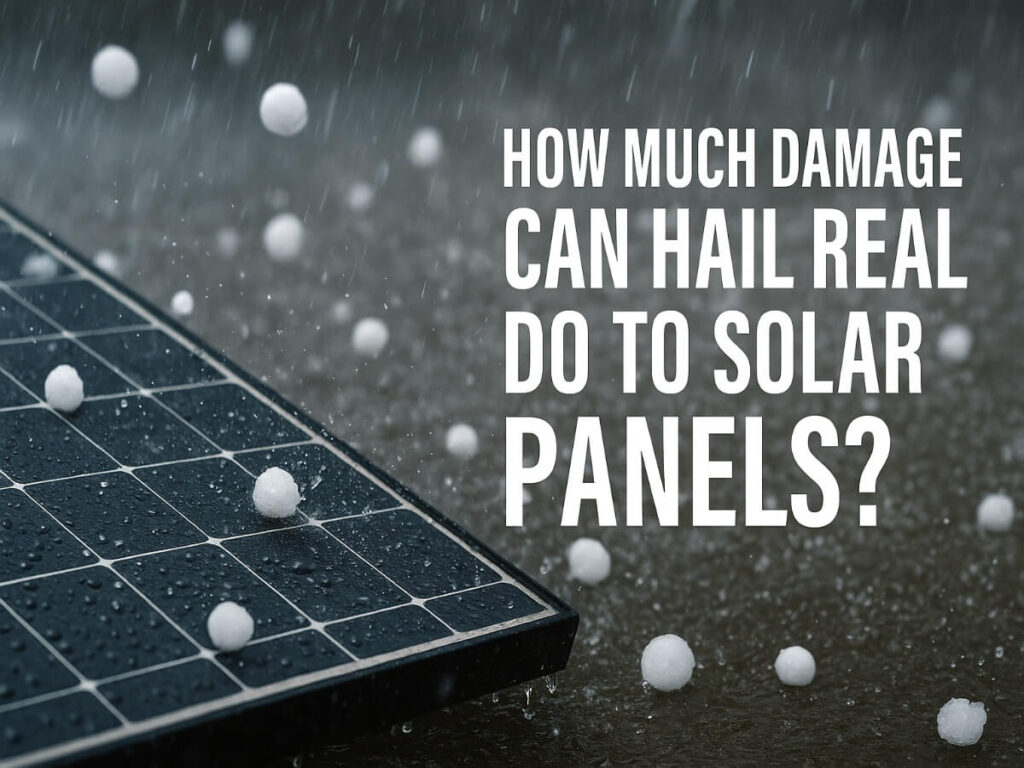
How Much Damage Can Hail Really Do to Solar Panels? The Truth Every Homeowner Should Know
Solar panels are built tough — but Australia’s hailstorms are tougher.
While the industry often claims panels can withstand “standard hail impact,” real-world storms tell a very different story. Here’s an honest look at how hail actually affects solar panels, why many systems fail, and how homeowners can protect themselves before the next big storm hits.
1. The Myth of “Hail-Proof” Solar Panels
Most solar manufacturers advertise that their panels pass a hail-impact test, usually involving:
- A 25mm ice ball
- Fired at 23 m/s
- Striking the centre of the panel
Sounds impressive — but here’s the catch:
Real Australian hailstorms often produce hailstones 40–100mm in size, falling at 80–100 km/h, and striking edges, corners, and frames — not the centre panel point used in testing.
The result?
Panels pass the “lab test” but still fail under real impact conditions.
2. Types of Hail Damage (Most Homeowners Don’t Notice)
Solar damage isn’t always obvious. In fact, many households don’t realise their panels are compromised until performance drops.
Visible Damage
- Shattered or cracked glass
- Holes punched through the surface
- Dented frames
- Broken corners
Invisible Damage (the dangerous kind)
- Micro-fractures in the cells
- Hairline cracks in the laminate
- Internal hotspots
- Damaged busbars
- Reduced output over months or years
Micro-cracks can reduce solar production by 10–30%, often silently.
3. The Cost of Hail Damage
Replacing solar panels is rarely cheap:
- $400–$700 per panel replacement
- $3,000–$15,000+ for full array replacement
- Additional costs for:
- Labour
- Disposal
- Re-inspection
- Inverter checks
Some insurers now require homeowners to install protective systems to reduce risk — or they may raise premiums.
4. The Rise of Hailstorms in Australia
Meteorologists have recorded a steady rise in:
- Supercell storms
- High-velocity hail
- Unpredictable seasonal patterns
Cities like Brisbane, Gold Coast, Ipswich, Sydney, and Canberra are now classified as high-risk hail zones.
5. How HailProtect Solves the Problem
The HailProtect net system provides:
- A floating protective barrier above the panel
- UV-stable nylon mesh to absorb hail impact
- Over 90% sunlight transmission
- Zero drilling or roof modification
- Simple DIY installation
Instead of relying on fragile glass to take a beating, you give your panels a lightweight armour layer designed for real-world storms.
Conclusion
Solar panels are a major investment — but hail damage is more common and more severe than most homeowners realise.
A small, affordable protective system like HailProtect can mean the difference between a functioning solar setup and a multi-thousand-dollar insurance claim.